
Cincinnati Apartment & Rental Property Injury Lawyer
If you suffered an injury at an apartment complex or rental property in Cincinnati, you may have the right to pursue compensation. A Cincinnati apartment & rental property injury lawyer helps tenants, visitors, and residents hold property owners accountable when unsafe conditions lead to harm.
Whether your injury happened in a stairwell, parking lot, or shared hallway, liability often turns on whether the property owner failed to address known hazards.
Apartment buildings and rental homes must remain reasonably safe for those who live there and those who enter the property. When landlords or property managers ignore maintenance issues, delay repairs, or overlook safety risks, preventable accidents can occur. These incidents often lead to medical expenses, missed work, and long recovery periods that affect your daily life.


“Property owners who rent apartments have a duty to maintain safe living conditions. When hazards go unaddressed, preventable injuries can occur that place an unfair burden on tenants and visitors.”
~ Richard E. Reverman, Cincinnati Apartment & Rental Property Injury Lawyer
You do not have to sort through these challenges alone. Legal guidance can help you understand your rights, identify responsible parties, and pursue compensation. Call (513) 400-0000 today to schedule a consultation and discuss your situation.
Common Injuries at Apartment Complexes and Rental Properties
Apartment buildings across Cincinnati contain shared areas where tenants and visitors move throughout the day. When these areas are poorly maintained, accidents can occur.
Common locations where injuries happen include:
- Stairwells
- Hallways
- Parking lots
- Elevators
- Entryways
- Walkways and sidewalks
Property owners must take reasonable steps to maintain these areas and address known hazards. Failure to do so may lead to serious injuries.
Common injuries include:
- Broken bones
- Traumatic brain injuries
- Back and spinal injuries
- Deep cuts or lacerations
- Internal injuries
- Severe bruising
These injuries may require medical treatment, physical therapy, or time away from work.
Table of Contents
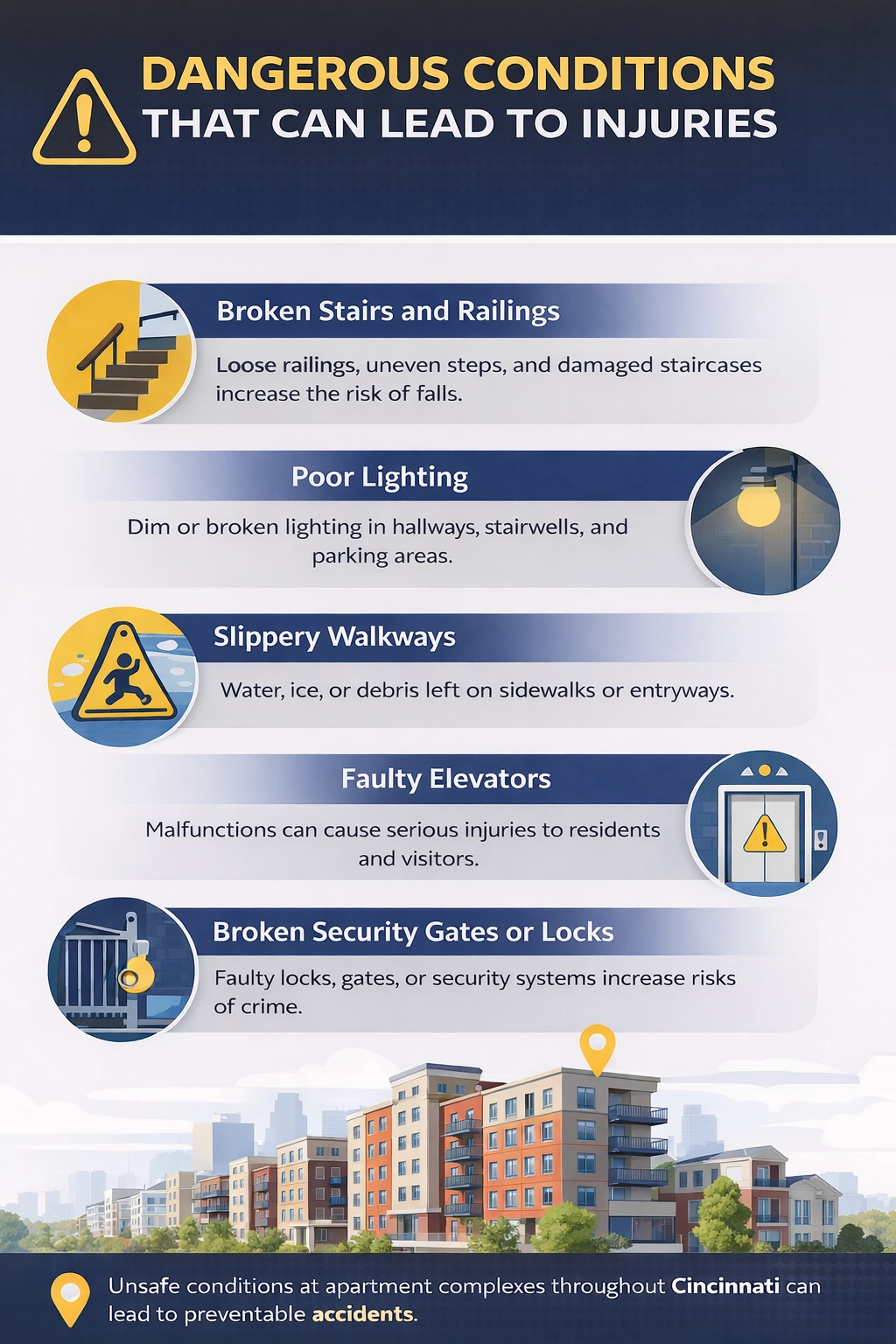
Dangerous Conditions That Can Lead to Injuries

Unsafe conditions at apartment complexes throughout Cincinnati can lead to preventable accidents.
Some of the most common hazards include:
Broken Stairs and Railings
Loose railings, uneven steps, and damaged staircases increase the risk of falls. Stairwells remain one of the most dangerous areas of many apartment complexes.
Poor Lighting
Dim or broken lighting in hallways, stairwells, and parking areas can make it difficult to see hazards or potential threats.
Slippery Walkways
Water, ice, or debris left on sidewalks or entryways may create dangerous slip hazards.
Faulty Elevators
Elevators must receive proper maintenance and inspections. Malfunctions can cause serious injuries to residents and visitors.
Broken Security Gates or Locks
Apartment complexes must maintain functioning locks, gates, and security systems. When security features fail, residents and guests may face increased risks.
Landlord Responsibilities for Apartment Safety
Property owners who rent apartments in Cincinnati must maintain safe conditions in shared areas. This responsibility includes addressing hazards that could cause injury.
Landlord duties may include:
- Repairing structural hazards
- Maintaining stairways and railings
- Ensuring adequate lighting
- Removing snow or ice from walkways
- Addressing security issues
- Responding to maintenance complaints
When landlords ignore known hazards or delay repairs, injuries may occur that could have been prevented. After being injured on someone else’s property, victims can take legal action.
Who May Be Responsible for an Apartment Injury?
Several parties may share responsibility when someone is injured at an apartment complex or rental property in the Cincinnati area.
Potentially responsible parties may include:
- Property owners
- Property management companies
- Maintenance contractors
- Security companies
- Cleaning or landscaping services
Determining liability often requires examining maintenance records, inspection reports, and incident reports.
An investigation may also review whether the property owner knew about the hazard before the injury occurred.
How Is Liability Proven in an Apartment Injury Case?
After identifying who may be responsible for your injury, the next step is proving how that responsibility applies to your situation. Liability often depends on whether a property owner or another party knew about a dangerous condition and failed to address it within a reasonable time.
To establish liability, an investigation may focus on several key factors:
- Identify the hazardous condition: The specific issue that caused the injury, such as a broken stair, poor lighting, or slippery surface, must be clearly documented.
- Determine who controlled the area: Responsibility often depends on who owned, managed, or maintained the location where the injury occurred.
- Review maintenance records: Repair logs and inspection reports may show whether the hazard existed long enough to require corrective action.
- Examine prior complaints: Previous tenant reports or service requests may indicate that the property owner had notice of the issue.
- Analyze incident reports: Documentation created after the injury can help establish what happened and when.
This process helps connect unsafe conditions to responsible parties before examining how injuries affect tenants and visitors.
Injuries to Tenants vs. Visitors
Injuries at apartment complexes do not only affect tenants. Visitors may also suffer harm while on the property.

Injuries to Tenants
Tenants expect reasonably safe living conditions. When landlords fail to maintain safe common areas, tenants may suffer injuries inside shared spaces such as stairwells, hallways, or parking lots.
Injuries to Guests and Visitors
Guests, delivery drivers, and service workers frequently enter apartment properties. Property owners must take reasonable steps to maintain safe conditions for these visitors as well. If hazards remain unaddressed, visitors may suffer serious injuries.
Evidence That May Support an Apartment Injury Claim
Evidence plays an important role in establishing how an injury occurred and whether a property owner failed to maintain safe conditions.
Helpful evidence may include:
- Incident reports
- Photographs of hazards
- Surveillance camera footage
- Maintenance records
- Witness statements
- Medical records
Because conditions may change quickly after an accident, early documentation of hazards may strengthen a claim.
How Much Is an Apartment Injury Case Worth?

The value of an apartment injury case depends on several factors, including the severity of your injuries, the type of medical treatment required, and how the incident affects your ability to work and carry out daily activities. Cases involving more serious injuries or long-term recovery often result in higher compensation due to ongoing medical needs and lasting impact on your quality of life.
Liability also plays a key role. If evidence clearly shows that a property owner or another responsible party failed to address a known hazard, it may strengthen the claim. Compensation may include medical expenses, lost wages, reduced earning ability, and pain and suffering.
A careful evaluation of your injuries, expenses, and the circumstances surrounding the incident can help determine the full value of your case.
Common Apartment Injury Scenarios
Apartment complexes contain many shared spaces where hazards may exist. Some situations frequently lead to injury claims.
Slip and Fall Accidents
Slip and fall incidents are among the most common causes of injuries at apartment complexes. These accidents often occur when surfaces are not properly maintained or hazards are left unaddressed.
Common causes of slip and fall accidents include:
- Recently mopped floors that are wet and without warning signs
- Ice or snow accumulation on sidewalks or entryways
- Loose or torn carpeting in hallways
- Uneven pavement or cracked concrete
- Spilled liquids in shared spaces
Falls can lead to serious injuries, including fractures, head trauma, and back injuries. In many cases, these hazards develop over time, which may indicate that the property owner had an opportunity to correct the issue before the accident occurred.
Stairway Accidents
Stairwells present a high risk for injury due to frequent use and the potential for structural issues. When stairs are not properly maintained, even a minor defect can result in a dangerous fall.
Hazards that contribute to stairway accidents include:
- Broken or uneven steps
- Loose or missing handrails
- Worn stair treads
- Poor lighting that limits visibility
- Debris left on steps
Because staircases are essential access points, property owners must inspect and maintain them regularly. A failure to repair known issues may increase the likelihood of serious injuries.
Parking Lot Injuries
Parking areas often combine vehicle traffic with pedestrian movement, which creates multiple risks. Poor maintenance or inadequate design can contribute to accidents involving both people and vehicles.
Common parking lot hazards include:
- Potholes or cracked pavement
- Poor drainage leading to standing water or ice
- Faded or unclear markings for walkways
- Inadequate lighting at night
- Obstructed views due to poor layout
These conditions may lead to slip and fall incidents, trips, or even vehicle-related accidents. Property owners are expected to maintain parking areas in a condition that allows for safe use.
Elevator Accidents
Elevators must function properly to safely transport residents and visitors between floors. Mechanical issues or lack of maintenance can create dangerous situations.
Elevator-related incidents may involve:
- Sudden drops or stops
- Doors closing too quickly
- Misalignment with floors
- Entrapment due to malfunction
- Failure of emergency systems
These events can result in physical injuries and, in some cases, prolonged entrapment. Regular inspection and servicing are critical to prevent these types of accidents.
Inadequate Security Incidents
Apartment complexes must take reasonable steps to provide a safe environment for tenants and visitors. When security measures fail, the risk of criminal activity may increase.
Security-related issues may include:
- Broken or unlocked entry gates
- Faulty door locks or access systems
- Poor lighting in common areas
- Lack of surveillance cameras
- Failure to address prior safety concerns
When property owners are aware of security risks but fail to take action, preventable incidents may occur. These situations can lead to serious harm and may form the basis of a premises liability claim.
Steps to Take After an Apartment Injury
If you are leaving the hospital after an injury at an apartment complex or rental property, you may feel uncertain about what comes next. Medical care is only the first step. The actions you take in the hours and days that follow can affect your ability to protect your rights and pursue compensation.
Even if the accident already happened, there are still important steps you can take to preserve evidence and strengthen your claim.
Follow Up on Medical Treatment
After you leave the hospital, follow all recommended treatment plans. Attend follow-up appointments, take prescribed medications, and monitor your symptoms closely.
Medical records create a direct link between your injury and the incident. Delays in treatment or missed appointments may raise questions about the severity of your injuries. If new symptoms develop, seek medical attention right away and make sure those updates are documented.
Report the Incident if You Have Not Already
If no formal report was created at the time of the accident, notify the property manager or landlord as soon as possible. Ask for a written incident report and request a copy for your records.
Reporting the incident establishes a timeline and places the property owner on notice. Keep your communication brief and factual. Avoid speculation about fault or the cause of the accident.
Document the Scene While It Is Still Fresh
Even if you have already left the property, you may still be able to gather evidence. If possible, return to the scene or ask someone you trust to take photographs or videos of the hazard.
Focus on capturing:
- The exact location of the incident
- The condition that caused the injury
- Lighting conditions and surrounding areas
- Any warning signs or lack of warnings
Conditions can change quickly after an accident. Hazards may be repaired or removed, which makes early documentation especially important.
Identify Witnesses and Preserve Their Information
If anyone saw the incident or the condition that caused it, try to obtain their contact information as soon as possible. Witnesses can provide independent accounts that support your version of events.
If you were unable to gather this information at the scene, consider whether neighbors, employees, or nearby residents may have knowledge of what happened. Written or recorded statements may help preserve their observations.
Organize and Keep All Records
Start collecting and organizing documents related to your injury. This includes:
- Hospital discharge paperwork
- Medical bills and treatment records
- Prescription receipts
- Photos and videos
- Written communication with the property owner
Keeping these records in one place makes it easier to track your recovery and document your losses. These materials may also play a key role in supporting your claim.
Be Careful When Speaking With Insurance Companies
You may be contacted by an insurance adjuster shortly after the incident. Be cautious about what you say and avoid giving recorded statements without understanding your rights.
Insurance representatives may ask questions designed to limit liability. Stick to basic facts and avoid discussing fault, your injuries in detail, or the impact on your daily life until you have a clear understanding of your legal options.
Insurance companies may contact you soon after an apartment injury and ask for a recorded statement. These statements can be used to dispute liability or minimize your injuries. Providing only basic information and understanding your rights before answering detailed questions may help protect your claim.
Why Apartment Injury Claims Can Be Challenging
Property owners and their insurance companies often dispute responsibility after an injury occurs.
Common defense arguments may include:
- The property owner did not know about the hazard
- The injured person caused the accident
- The condition was obvious and avoidable
- The injury is less serious than claimed
Investigating maintenance records and documenting hazardous conditions may help address these disputes.
Ohio law limits the time you have to file a personal injury lawsuit after an accident. In many cases, injured individuals have two years from the date of the injury to file a claim.
Missing this deadline may prevent you from pursuing compensation through the court system. Because evidence can disappear and witness memories fade, beginning the process early may help preserve important information.
Frequently Asked Questions About Apartment Injury Claims
Apartment and rental property injuries often raise questions about responsibility and compensation. The following answers address common concerns.

Can I file a claim if I am a tenant at the apartment complex?
Yes. Tenants may pursue claims if unsafe conditions in common areas cause injuries. Landlords must maintain areas such as stairwells, hallways, parking lots, and walkways in reasonably safe condition for residents and visitors.
What if the landlord knew about the hazard but did not repair it?
If a landlord knew about a dangerous condition and failed to address it within a reasonable time, that information may support an injury claim. Maintenance requests, emails, or prior complaints may help demonstrate that the hazard existed before the injury occurred.
Can visitors file injury claims after accidents at apartment complexes?
Yes. Guests, delivery drivers, and other lawful visitors may pursue compensation if they suffer injuries caused by unsafe conditions on apartment property. Property owners must maintain reasonably safe conditions for both tenants and visitors.
What if more than one party is responsible for the injury?
Multiple parties may share responsibility in some apartment injury cases. For example, a property owner, management company, or maintenance contractor may contribute to unsafe conditions. Liability may depend on who controlled the area where the injury occurred.
Contact Our Cincinnati Apartment & Rental Property Injury Lawyers
If you suffered injuries due to unsafe conditions at an apartment complex or rental property in Cincinnati, you may have the right to pursue compensation. A Cincinnati apartment & rental property injury lawyer can help you understand your legal options and take steps toward recovery.
Call Young, Reverman & Bolotin at (513) 400-0000 today to schedule a consultation and learn how to move forward after an apartment or rental property injury in Cincinnati.