
What happens if fault is disputed after a car accident in Indiana depends largely on the evidence you provide and the specific liability statutes governing the state. While some collisions involve a clear error by a single driver, many incidents result in conflicting stories and disagreements between insurance carriers regarding who is truly responsible. Indiana follows a legal system that allows for shared responsibility, which means you can still pursue financial recovery even if you contributed to the crash in some way. However, the final outcome of your claim hinges on where the majority of the blame falls, making it essential to understand the mechanics of a dispute.
If you are facing a disputed car accident claim in Indiana, contact Young, Reverman & Bolotin at (513) 400-0000 to review your case and help you understand your rights.
Table of Contents
Why Fault Is Often Disputed After Car Accidents in Indiana
Disagreements regarding liability occur frequently because the outcome of an insurance claim or personal injury lawsuit depends entirely on who is at fault. Often, drivers have different memories of the seconds leading up to an impact because of the high stress of the moment. One person might believe they had a green light, while the other insists the signal was still yellow when they entered the intersection. Beyond human memory, insurance companies have a financial incentive to challenge your version of events to reduce the amount they must pay out. When an insurance adjuster identifies a disputed car accident claim in Indiana, they will look for any reason to shift a percentage of the blame toward you.
Common reasons for an Indiana car accident fault dispute include:
- Conflicting witness statements about the speed or lane position of the vehicles.
- Disagreements over whether a driver was looking at a mobile device.
- Arguments regarding who had the right of way at an unmarked intersection.
- Lack of video surveillance or dashcam footage to verify the sequence of events.
- Police reports that do not clearly assign a primary factor for the collision.
- Assertions that poor weather or road conditions, rather than driver behavior, caused the crash.
In 2023, Indiana saw over 204,000 collisions, leading insurance adjusters to dispute fault to protect their profits. Under the state’s modified comparative fault system, victims can recover damages only if they’re 50% or less at fault. Insurers often argue that claimants are more than 50% responsible to deny claims or minimize payouts. Disputing fault is a tactic used to pressure injured parties into accepting lower settlements for medical expenses and vehicle repairs.
How Indiana Law Determines Fault in a Car Accident Claim
To determine fault, the injured party must demonstrate that the other driver was negligent, which involves showing four key elements: they had a legal duty to drive safely, they breached that duty through careless actions, their breach directly caused the accident and injuries, and actual damages were incurred.
The elements of negligence are established through various forms of evidence, including police reports, witness statements, physical evidence such as photographs and skid marks, surveillance footage, and professional analysis.
Under Indiana’s modified comparative fault laws, if you are found to be 50% at fault or less, you can still recover damages, though it will be reduced by your fault percentage. However, if you exceed 51% fault, you cannot recover any damages. Additionally, fault may be apportioned among multiple parties, with each party assigned a portion of the total fault.
What to Do When the Other Driver Disputes Fault
If the other driver or their insurance provider denies responsibility, you must take proactive steps to support your side of the story. The burden of proving fault after a crash lies with the person seeking compensation. You should immediately secure evidence, file a police report, and contact your insurer.
Gather Evidence
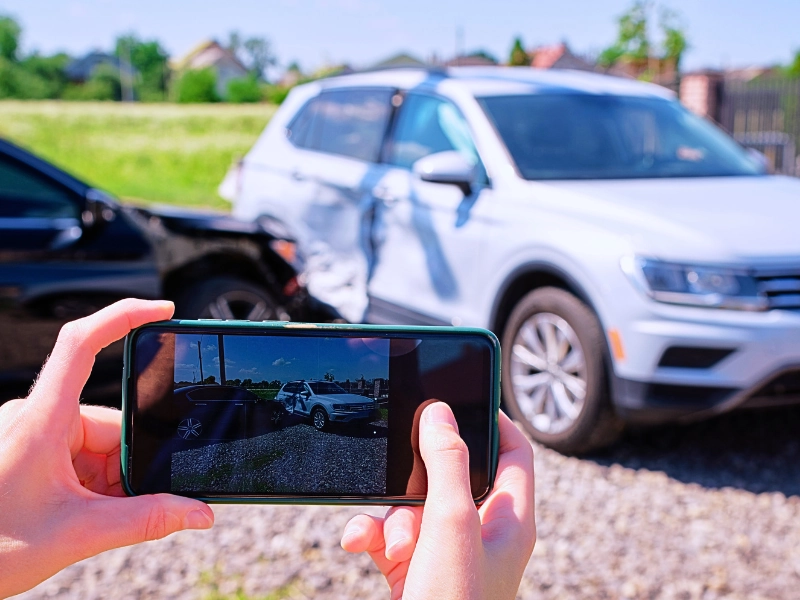
Take photos of vehicle damage, positions, road debris, and injuries. Act quickly to request traffic camera, dashcam, or security footage from nearby businesses before it is deleted.
File a Police Report
Ensure law enforcement records the incident, as this official report provides crucial evidence, even for minor accidents. In some cases, an Indiana Bureau of Motor Vehicles (BMV) accident report form must be filed.
Identify Witnesses
When the other driver is disputing fault, witnesses can become one of the most powerful pieces of evidence in your case. Collect contact information from witnesses who saw the accident occur, including their full names, phone numbers, and email addresses. Independent third-party witnesses can provide unbiased statements about what they observed, such as which driver had the right of way, whether a traffic signal was ignored, or if speeding or distracted driving played a role. Be sure to share this information with law enforcement at the scene and provide it to your attorney or insurance company as soon as possible. Strong witness testimony can make a critical difference when fault is contested.
Notify Your Insurance Immediately
Inform your insurance company of the accident and the dispute so that they are aware, but avoid admitting fault yourself.
Hire an Attorney
Securing an Indiana car accident lawyer early is crucial for handling fault disputes. When liability is unclear, your Indiana injury lawyer can obtain the other driver’s cell phone records to investigate distracted driving laws violations. They may also employ accident reconstructionists to analyze how the vehicles interacted. This detailed approach helps combat “he-said, she-said” scenarios, ensuring you aren’t unfairly blamed. Focus on building a solid case that prompts the insurance company to negotiate fairly.
In Indiana, you have two years from the accident date to file a personal injury lawsuit. While this might seem adequate, evidence can vanish quickly. Witnesses relocate, memories fade, and vehicles get repaired or destroyed. To preserve the best information, start the legal process promptly. The determination of fault, whether in a minor accident or a serious collision, will impact your recovery.
If you are dealing with an Indiana car accident fault dispute, contact us at Young, Reverman & Bolotin to help you navigate the legal process and pursue your compensation. Our team is familiar with the strategies insurance companies may use to deny claims.
Frequently Asked Questions
What happens if fault is disputed after a car accident in Indiana?
The insurance companies will investigate, and if they can’t agree, the case may go to litigation where a judge or jury assigns fault.
How is fault determined in an Indiana car accident claim?
Fault is assessed through evidence like police reports, witness accounts, and damage. Indiana’s modified comparative negligence system allows you to recover damages if you are less than 50 percent at fault.
When should I contact an attorney if the other driver disputes fault?
You should contact an Indiana car accident attorney as soon as you notice a dispute. Early intervention helps preserve critical evidence for your case.


