
Cincinnati Spinal Cord Injury Lawyer
A spinal cord injury changes your life in seconds. Medical care begins immediately. Work stops. Long-term questions surface before answers do. If someone else caused your spinal cord injury in Cincinnati, figuring out how your future care will be paid for should not fall on you alone.
At Young, Reverman & Bolotin, we help people and families across Cincinnati protect spinal cord injury claims involving paralysis, loss of mobility, and permanent neurological damage. Whether the injury resulted from a motor vehicle crash, a fall, a workplace incident, or unsafe property conditions, early legal involvement helps preserve evidence, document future care needs, and manage insurance communication before critical mistakes are made.
You do not need to wait and hope an insurer fairly accounts for a life-altering injury. You need a legal team that understands how spinal cord injury claims are evaluated and takes control from the beginning.


“Spinal cord injury claims require patience, planning, and careful
documentation. The outcome depends on how well the long-term effects are presented, not how fast a claim moves.”
~ Accident Lawyer Jay A. Bolotin
Call Young, Reverman & Bolotin at (513) 400-0000 to speak with a Cincinnati spinal cord injury lawyer and learn how to protect your claim from the start.

How a Cincinnati Spinal Cord Injury Lawyer Helps You From the Start
Spinal cord injury cases rise or fall on proof. The earlier your case is structured correctly, the stronger your position becomes.
When you speak with a Cincinnati spinal cord injury lawyer, the focus is not speed. The focus is protection.
That work often includes:
- Preserving crash or incident evidence.
- Securing medical imaging and treatment records.
- Identifying all responsible parties.
- Documenting short-term and long-term care needs.
- Handling insurance communication before pressure builds.
Spinal cord injuries often involve permanent mobility limits, adaptive equipment, and future care planning. These losses must be supported by medical records and professional evaluations. Without that structure, insurers often undervalue claims early and resist adjustments later.
Table of Contents
Why Spinal Cord Injury Claims Face Greater Insurance Resistance

Spinal cord injury claims are treated differently than routine injury cases. The financial exposure is higher, the future care costs are ongoing, and insurers know that once responsibility is established, the claim value may increase significantly.
Because of that, these cases are often challenged early. Insurance companies may question the cause of the injury, the severity of symptoms, or whether future care is truly necessary. They may request repeated documentation or push for early resolution before the long-term picture is clear.
This is why early structure matters. Claims supported by consistent medical records, diagnostic imaging, and future care planning are harder to dismiss. When documentation is incomplete or delayed, insurers gain leverage that can reduce recovery.
Understanding Spinal Cord Injuries and Their Long-Term Impact

A spinal cord injury disrupts communication between the brain and the body. Damage may affect movement, sensation, or organ function below the injury site. The outcome depends on the level of injury, severity, and treatment path that follows.
Some people regain limited function. Others face permanent paralysis. Every spinal cord injury requires ongoing evaluation.
Complete and Incomplete Spinal Cord Injuries
A complete spinal cord injury results in total loss of motor function and sensation below the injury level. An incomplete injury allows limited movement or sensation to remain. Both require careful medical documentation and future planning.
Injury Levels and Functional Effects
How a spinal cord injury affects the body depends on the location of the injury along the spine.
- Cervical spine injuries often affect the arms, legs, and torso, and may involve breathing difficulties.
- Thoracic spine injuries frequently result in paraplegia and lower-body paralysis.
- Lumbar and sacral injuries may affect leg strength, bladder control, and overall mobility.
Because spinal cord injuries can have lasting physical effects, identifying how the injury occurred becomes an important part of the analysis.
Common Causes of Spinal Cord Injuries in Cincinnati
Spinal cord injuries often result from sudden trauma connected to negligence. In Cincinnati, some of the leading causes include:
Motor Vehicle Accidents
Car, truck, and motorcycle crashes remain a leading cause of spinal cord injuries. High-speed impacts, rollovers, and rear-end collisions place extreme force on the spine, especially on congested routes such as I-71 and I-75.
Falls and Unsafe Property Conditions
Falls from heights, poorly maintained walkways, and unsafe premises frequently result in spinal trauma. These cases may involve landlords, property owners, or maintenance providers.
Construction and Workplace Incidents
Construction sites and industrial workplaces present serious risks. Equipment failures, scaffolding collapses, and job-site falls often lead to workplace accidents that cause spinal cord injuries and may involve multiple responsible parties.
Compensation Available After a Spinal Cord Injury
Compensation in a spinal cord injury claim reflects both immediate losses and long-term consequences. Each category must be supported with documentation.

Medical Treatment and Ongoing Care
Medical damages may include:
- Emergency treatment and hospitalization.
- Surgical procedures and follow-up care.
- Rehabilitation and physical therapy.
- Assistive devices and mobility equipment.
- Projected future medical needs.
Future care planning plays a major role in claim evaluation. Insurers rely on medical records and treatment projections when assessing value.
Income Loss and Employment Impact
Spinal cord injuries often prevent a return to previous work. Compensation may address your lost wages, any loss of earning capacity, and any job limitations that are supported by medical restrictions.
Pain, Daily Limitations, and Life Changes
Non-economic damages reflect how the injury alters daily life. These effects may include chronic pain, loss of independence, limited mobility, and changes to family responsibilities.
Long-Term Assistance and Adaptive Needs
Many spinal cord injuries require home modifications, transportation adjustments, and ongoing assistance with daily tasks. These costs should be identified and documented early.
How Liability Is Proven in Spinal Cord Injury Cases
Liability must be shown through evidence, not assumptions. Spinal cord injury claims depend on records, timelines, and medical support.
Evidence may include:
- Accident or incident reports
- Witness statements
- Video footage and photographs
- Vehicle or equipment inspections
- Medical records linking the injury to the event
Some cases involve more than one responsible party. Employers, property owners, contractors, or drivers may share liability. Identifying all parties strengthens the claim.
How Medical Documentation Connects a Spinal Cord Injury to the Accident
In spinal cord injury cases, proving that the accident caused the injury is just as important as proving how the accident happened. Insurers often focus on medical causation, especially when symptoms evolve over time.
Medical records must show a clear timeline. Emergency evaluations, imaging studies, specialist visits, and therapy notes should consistently reference the injury and its functional impact. Gaps in care or inconsistent reporting can be used to question whether the injury was related to the incident.
Diagnostic imaging, such as MRI or CT scans, plays a central role. These findings help establish injury level, severity, and long-term prognosis. When future care is anticipated, medical opinions and care planning support that projection.
Mistakes That Can Reduce the Value of a Spinal Cord Injury Claim
Spinal cord injury claims are evaluated carefully and often skeptically. Insurance companies look for weaknesses early, especially in cases involving long-term care and high future costs. Small missteps in the weeks after an injury can limit recovery long before the full impact is understood.
Accepting an Early Settlement
Early settlement offers are often made before the long-term effects of a spinal cord injury are known. These offers may account for initial hospital care but fail to reflect future treatment, adaptive needs, or permanent limitations. Once a claim is resolved, it is usually final, even if new symptoms appear or care needs increase later.
Gaps in Medical Treatment
Consistent medical care helps establish the seriousness and progression of a spinal cord injury. Delays, missed appointments, or incomplete follow-up allow insurers to question whether the injury is as severe as reported or whether it was caused by the accident at all. Clear treatment timelines help protect both medical recovery and the claim itself.
Providing Recorded Statements Without Guidance
Recorded statements often become part of the insurer’s evaluation of fault and damages. Even accurate statements can be taken out of context or used to minimize symptoms. In spinal cord injury cases, early statements may conflict with later medical findings, creating challenges that are difficult to correct.
Underestimating Future Care Needs
Spinal cord injuries often involve care needs that change over time. Claims that focus only on current expenses may overlook future therapy, equipment, home modifications, or assistance. Without early planning and documentation, insurers may argue that future needs are speculative rather than necessary.
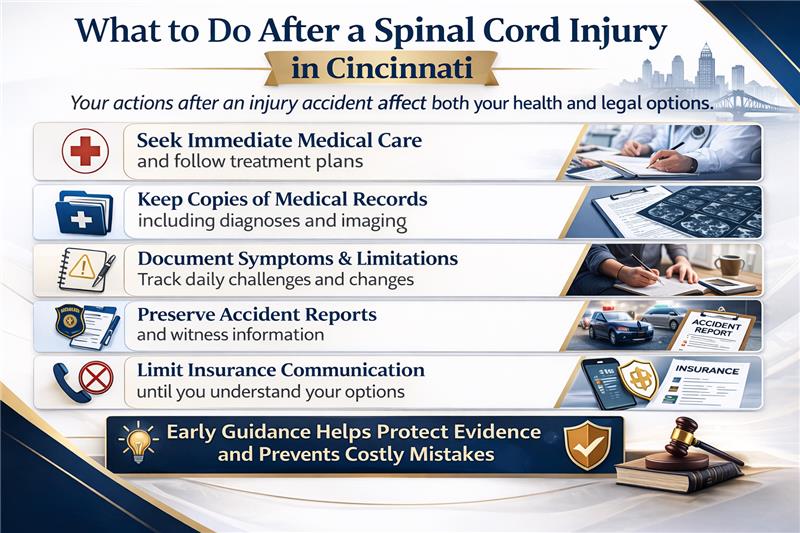
What to Do After a Spinal Cord Injury in Cincinnati
Your actions after suffering a spinal cord injury affect both health and legal options.
- Seek medical care and follow treatment plans.
- Keep copies of medical records and imaging results.
- Document symptoms, limitations, and daily challenges.
- Preserve accident reports and witness information.
- Limit insurance communication until you understand your options.
Early guidance helps protect evidence and prevents costly mistakes.
Frequently Asked Questions About Spinal Cord Injury Claims
Spinal cord injuries raise immediate questions about medical care, responsibility, and long-term financial impact. The answers below address some of the most common concerns people have after a serious spinal injury in Cincinnati and explain why early documentation and legal guidance matter.

How long do you have to file a spinal cord injury claim in Ohio?
In most cases, Ohio spinal cord injury claims have to be filed within two years of the date of injury. Missing this deadline can have a significant impact on your ability to recover compensation, even if the injury is severe. Because exceptions and shorter deadlines may apply in certain situations, it is important to understand how the timeline affects your specific case as early as possible.
What if you were partly at fault for the accident?
Ohio follows a comparative fault system, which means you may still recover compensation if you were less than 51% responsible. Any recovery may be reduced based on your share of responsibility, which makes accurate investigation and documentation critical. Early evidence often plays a key role in how fault is assigned.
How is the value of a spinal cord injury claim determined?
The value of a spinal cord injury claim depends on medical needs, income loss, and long-term impact on daily life. Insurers evaluate claims based on medical records, future care projections, and documentation of functional limitations, not just initial hospital bills. Claims that account for long-term care and assistance are often stronger than those focused only on current expenses.
Do spinal cord injury cases always go to court?
Many spinal cord injury cases resolve through negotiation, but court remains an option when insurers refuse fair evaluation. Litigation may be necessary when responsibility is disputed or future care needs are not properly recognized. Preparation from the beginning helps preserve that option if it becomes necessary.
Can a spinal cord injury claim include future medical and care costs?
Yes, future medical treatment and care needs may be included when supported by medical documentation. This may involve therapy, assistive devices, home modifications, or ongoing assistance. Identifying and documenting these needs early helps ensure they are addressed before a claim is resolved.
Our Spinal Cord Injury Lawyers Can Help You Protect Your Future
Did you suffer a spinal cord injury in Cincinnati because of someone else’s actions? Are you facing paralysis, loss of mobility, or permanent neurological limitations that require ongoing medical care? Has your injury affected your ability to work, live independently, or plan for the future? Spinal cord injuries often involve lifelong treatment, adaptive equipment, and long-term assistance. Compensation may be available to address medical expenses, future care needs, lost income, and the lasting impact on daily life.
Our spinal cord injury lawyers help individuals and families take control of these cases early. We focus on preserving evidence, documenting future care, and presenting claims in a way insurers are required to take seriously.
To speak with a spinal cord injury lawyer about your legal options, call Young, Reverman & Bolotin at (513) 400-0000 for a free consultation.